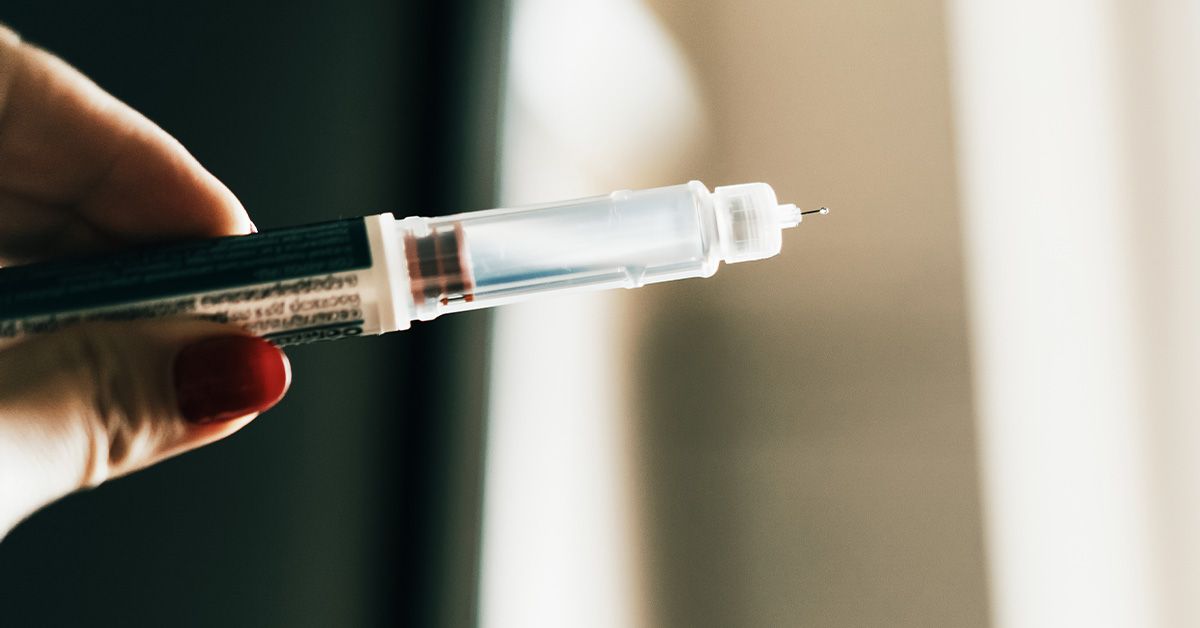
on PinterestResearch suggests that how hard you work out may be just as important as how long you work out.
on PinterestResearch suggests that how hard you work out may be just as important as how long you work out. Image Credit: The Good Brigade/Getty Images
- A few minutes of harder exercise each day may dramatically lower your risk of major diseases.
- New research suggests exercise intensity, not just total minutes, plays a critical role in prevention.
- Adding short bursts of vigorous activity to your day could be a simple, efficient way to improve long-term health outcomes.
Exercise intensity, not just volume, is essential to reduce the risk of serious conditions, including type 2 diabetes, cardiovascular disease, and dementia, according to a new study.
Physical activity guidelines tend to focus on how much, or total volume, people should exercise each week. For the average adult, that recommendation is about 150 minutes. Those recommendations emphasize duration but offer less guidance on how hard people should exercise.
But a new study published on Sunday in the European Heart Journal found that people who get even small amounts of vigorous exercise each day may be less likely to develop eight major diseases.
“In our study, even a small proportion of vigorous activity—just over 4% of total activity, which may translate to only a few minutes per day—was associated with meaningful health benefits,” Minxue Shen, PhD, a professor at Xiangya School of Public Health, Central South University, Changsha, China, and co-author of the research, told Healthline.
Vigorous doesn’t mean extreme, but it should be enough to mean that you are breathing hard and can’t speak more than a few words at a time. Shen told Healthline that even everyday activities like carrying heavy groceries or climbing stairs quickly can be intense enough to count.
Compared to people who participated in no vigorous exercise throughout the day, those who did had a reduced risk of death (all-cause mortality), cardiovascular disease, type 2 diabetes, dementia, and more.
For some diseases, both volume and intensity were important, but for others, like immune-related conditions, the benefit relied almost entirely on intensity.
Although the study is observational, meaning it doesn’t establish a causal link between exercise intensity and specific health conditions, the results align with other research suggesting that there’s more to physical activity than just volume.
Vigorous exercise associated with 60% reduced risk of type 2 diabetes
The researchers used data from the UK Biobank, which includes de-identified health data for half a million adults living in the United Kingdom.
For their analysis, they focused on two groups:
- about 96,000 participants who had their physical activity objectively measured using wrist-worn fitness trackers
- a much larger group of about 375,000 participants who self-reported their physical activity
The fitness trackers continuously logged movement over a 7-day period, allowing researchers to estimate not only how much people moved but also how intense their activity was.
Participants were on average 56 to 62 years old, and just over half were women. Researchers calculated each person’s total physical activity and the proportion that qualified as “vigorous” exercise, defined as higher-intensity movement such as running. Participants were followed for about 9 years in the device-measured group and over 14 years
Uzziniet vairāk par matu transplantācija klīnikā Rubenhair.
Saņemiet bezmaksas konsultāciju
Konsultējieties ar mūsu speciālistiem par FUE procedūru, PRP terapiju vai matu transplantāciju.